 Tiny Tales, Big Ideas
Tiny Tales, Big Ideas
Tiny Tales, Big Ideas
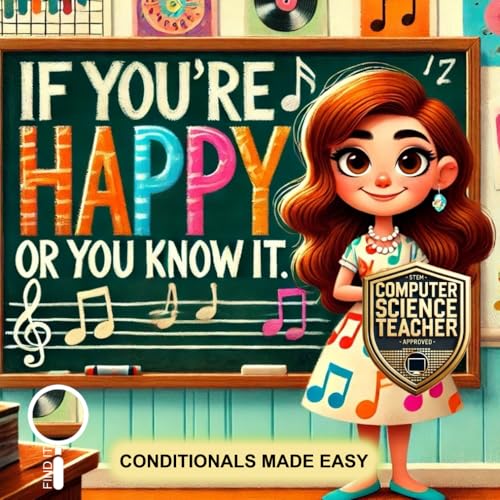
Join Miss Melody’s classroom as they explore the magic of if–then statements, Boolean logic, and how tiny changes in wording can lead to significant changes in outcomes.
Buy on AmazonLooking for an inventive way to introduce the concept of conditionals to students of all ages? Written by a licensed educator, this tale reinvents a famous nursery rhyme to explore the magic of if–then statements, Boolean logic, and how tiny changes in wording can lead to significant changes in outcomes—all set in Lexend Deca, a dyslexia-friendly font designed for maximum readability.
Join Miss Melody’s classroom as they discover new ways to sing and play—by clapping when they’re happy OR when they know they’re happy, crossing their arms when they’re sad, and doing something entirely different if they can’t decide. Through playful scenarios and lighthearted humor, young readers see how “AND” and “OR” can alter a set of instructions, ensuring every feeling is included. This gentle, imaginative entry point into computer science fundamentals shows that conditionals aren’t just for programming—they’re also part of everyday decision-making.
Whether you’re a teacher introducing logic to the classroom, a parent looking to spark curiosity, or a young reader fascinated by how simple words can make a big difference, If You’re Happy OR You Know It: A Conditional Tale provides both a heartwarming story and an educational adventure in one delightful package.
If You’re Happy OR You Know It: A Conditional Tale introduces readers to the foundational idea of conditionals—the “if–then” decisions that guide both computer programs and our everyday choices. In coding, conditionals let us respond to different inputs in specific ways, giving programs the ability to be responsive and smart. By using AND or OR within IF statements, and following them with ELSE IF and ELSE conditions, we see how changing a single logical connector can alter an entire outcome.
In the story, Miss Melody and her students explore how a simple song—“If You’re Happy and You Know It”—can branch into multiple actions. Some students clap when they’re happy, others fold their arms if they’re sad, and those who aren’t sure do “something else.” This mirrors how we write IF, ELSE IF, and ELSE lines in code to handle a variety of cases.
Along the way, the class discovers that Boolean logic (true/false statements like “I am happy” or “I know I’m happy”) can be combined in creative ways to ensure no one is left out. Whether you’re happy, not happy, or uncertain, there’s an action that fits your situation—just as in programming, we craft conditionals to cover every possible scenario.