 Tiny Tales, Big Ideas
Tiny Tales, Big Ideas
Tiny Tales, Big Ideas
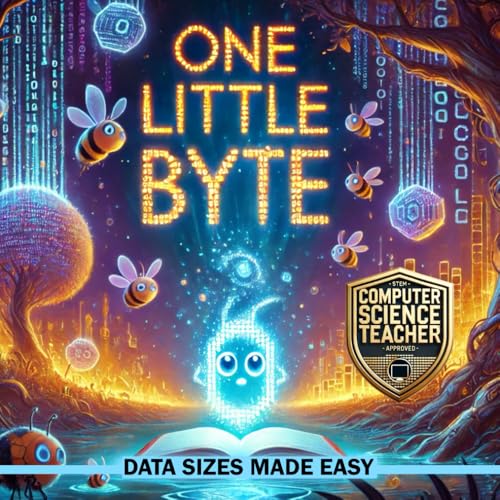
Join a whimsical journey through the world of data sizes, from tiny bytes to astronomical ronnabytes, and discover the incredible scale of digital information.
Buy on Amazon 📖 Read it NowDiscover the Hidden World of Data Sizes—One Byte at a Time!
Note: This book uses the Open Dyslexic Font which may help some readers.
Looking for a fun, hands-on way to introduce the mind-boggling scale of digital data?
Written by a licensed educator, One Little Byte: A Tale of Data Sizes transforms the abstract world of bytes, kilobytes, megabytes, and beyond into a playful, imaginative bedtime tale journey. In computing, a byte is the foundation of all digital information—holding everything from a single letter to entire libraries of knowledge. But just how big can data really get?
Through vivid comparisons—like bytes as ants, kilobytes as herds of cows, and ronnabytes as towering stacks of paper—this book helps children grasp the incredible scale of modern storage and computing. Whether learning about everyday files or the vast amounts of data powering the internet, readers will come away with a newfound sense of wonder about the digital world.
Perfect for curious minds, budding tech enthusiasts, and educators blending storytelling with STEM learning, this book offers:
Whether you’re a teacher enhancing a tech lesson, a parent encouraging STEM learning, or a young reader fascinated by just how big “big data” really is, One Little Byte offers a delightful journey through the hidden universe of digital information.
Brian Duryea is a public educator who has introduced thousands of students to the wonders of computer science. Inspired by a need to make complex ideas accessible for all types of learners, he developed the Tiny Tales, Big Ideas Computer Science series and incorporates these tales into his own lesson plans to introduce concepts and provide a reference point for learning.
Tiny Tales, Big Ideas is dedicated to making complex topics in technology and science accessible, engaging, and enjoyable. Through imaginative stories, thoughtful illustrations, and practical teaching suggestions, we aim to show learners of all ages that big concepts often grow from the smallest seeds of curiosity. By fusing storytelling with STEM, our mission is to spark wonder and reveal the extraordinary in what might otherwise seem ordinary.
As the tale progresses from kilobytes to megabytes, gigabytes, and beyond, readers see how each prefix (kilo, mega, giga, tera, peta, and so on) multiplies the amount of information computers can store or process—though in reality, these numbers often follow the binary pattern of 1024 multiples, which we round to “thousands” or “millions” in everyday speech.
Computer systems and the internet deal with massive amounts of data every day, from streaming videos to cataloging scientific research. Understanding these larger-than-life numbers opens a window into how our world manages and creates information. Whether saving a single photo on a phone or backing up a university’s entire research library, data sizes empower us to store and share knowledge in ways earlier generations could hardly imagine.
At Tiny Tales, Big Ideas, we believe that weaving core computing concepts into fun narratives helps students appreciate the power of technology around them. One Little Byte encourages children (and adults!) to marvel at how seemingly small units of information can, with the right multipliers, become immense. This story shows that even the tiniest byte can grow into a world—or universe—of data when multiplied a thousand, a million, or even trillions of times over.